
How Much Does It Cost to Charge an Electric Car?
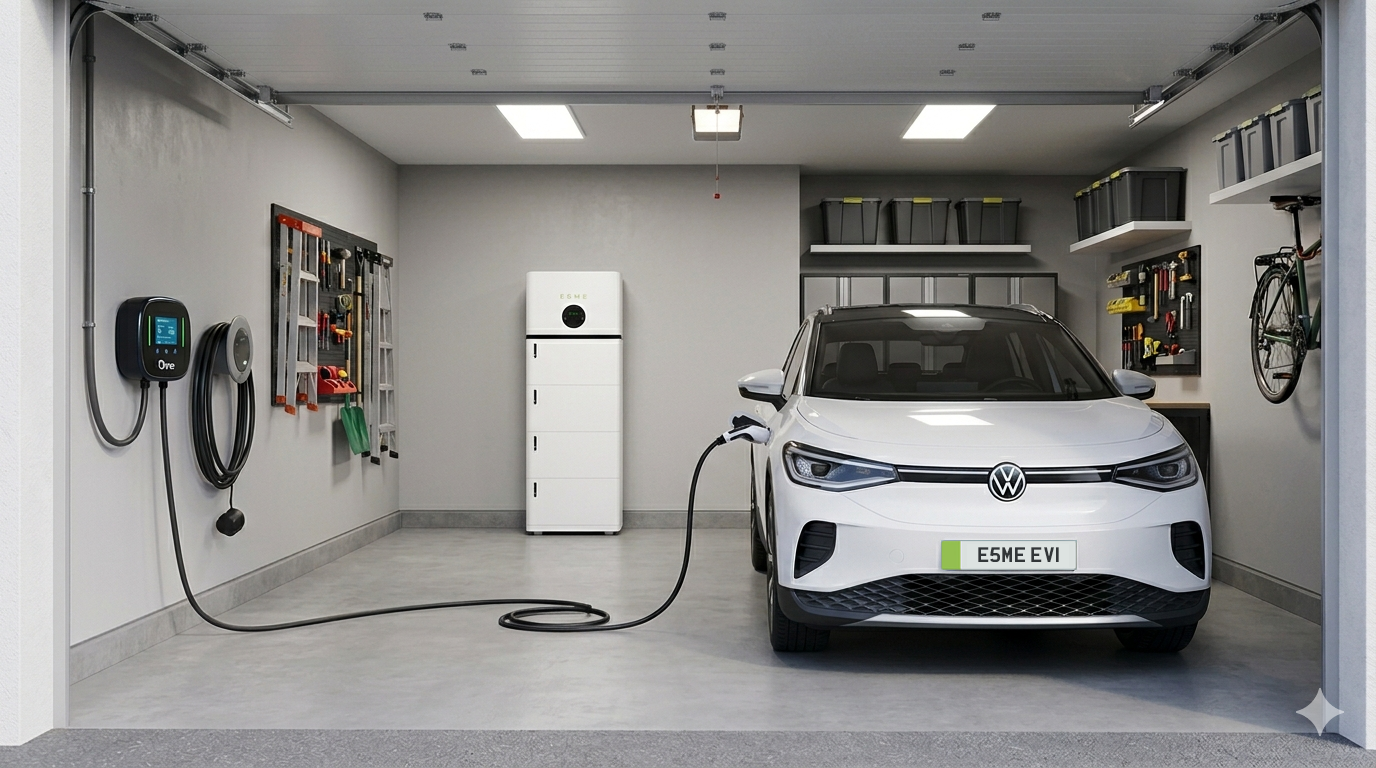
So you are thinking of switching to an EV, one of the first questions you’ll ask is:
how much does it cost to charge an electric car?
The answer depends on three main factors:
Your car’s battery size
Its real-world efficiency (miles per kWh)
The electricity tariff you use
Understanding these elements – and how peak and off-peak pricing works – is key to keeping your EV running costs as low as possible.
Standard EV Battery Sizes
Electric vehicles come with a range of battery capacities, typically measured in kilowatt-hours (kWh). Here are some common examples:
Small battery EVs: 35–45 kWh
Medium battery EVs: 50–65 kWh
Large battery EVs: 70–100+ kWh
Real-world examples include:
Nissan Leaf – 40 kWh battery
Tesla Model 3 – ~60 kWh battery
Tesla Model Y – ~75 kWh battery
Hyundai Kona Electric – 64 kWh battery
Kia EV6 – 77.4 kWh battery
BYD Atto 3 – 60.5 kWh battery
Volkswagen ID.4 – 77 kWh battery
As a simple rule: the larger the battery, the more it costs to charge from empty to full. However, larger batteries often provide more miles per charge.
Miles Per kWh: Real-World Efficiency
An EV’s efficiency is measured in miles per kWh. In real UK driving conditions, most EVs achieve:
3.0–4.5 miles per kWh
For example:
A 40 kWh EV achieving 4 miles per kWh = 160 miles of range
A 60 kWh EV achieving 3.5 miles per kWh = 210 miles of range
A 77 kWh EV achieving 3.2 miles per kWh = 246 miles of range
Driving style, temperature, and motorway use all impact efficiency. Winter driving typically reduces range by 10–20%.
So, How Much Does It Cost to Charge an Electric Car at Home?
Let’s look at typical UK electricity prices.
Standard Tariff Example
If your electricity costs 28p per kWh (typical standard variable tariff):
40 kWh battery = £11.20 (0.28 × 40)
60 kWh battery = £16.80
75 kWh battery = £21.00
77 kWh battery = £21.56
If your car achieves 3.5 miles per kWh, your cost per mile is:
28p ÷ 3.5 = 8p per mile
That’s already significantly cheaper than petrol or diesel.
EV Tariffs: Lower Overnight Costs
Many suppliers now offer EV-specific tariffs with cheaper overnight rates.
For example:
Off-peak rate: 7–10p per kWh
Peak rate: 35–45p per kWh
If you charge a 60 kWh EV at 8p per kWh overnight:
60 × £0.08 = £4.80 for a full charge
Cost per mile (3.5 mi/kWh) = just over 2p per mile
That’s exceptionally low running costs.
The Hidden Issue: Higher Peak Rates
While EV tariffs offer attractive overnight rates, they often come with higher peak-time electricity costs.
For example:
Standard tariff: 28p all day
EV tariff: 8p overnight, 40p peak
If you only charge overnight, this works well.
However, if you use most of your household electricity during peak hours (cooking, washing, heating, etc.), your overall bill may increase.
The key question becomes:
Do peak-time increases offset the savings from cheap overnight EV charging?
For some households, the answer can be yes — especially if daytime electricity usage is high.
Shifting Appliances to Off-Peak
One way to maximise savings is to run appliances overnight, such as:
Dishwashers
Washing machines
Tumble dryers
Modern appliances often have delay timers, making this relatively easy.
By shifting more usage into the cheaper window, you improve the value of an EV tariff. However, not everyone wants to reorganise their daily routine around energy pricing.
The Smart Solution: Battery Storage
This is where home battery storage transforms the economics.
With a home battery system, you can:
Charge your battery at cheap overnight rates
Use that stored energy throughout the day
Avoid buying electricity at expensive peak rates
Charge your EV at the lowest possible cost
Instead of changing your lifestyle, your energy system does the work for you.
Battery storage allows you to:
Shift all household consumption to off-peak rates
Protect yourself from high peak pricing
Reduce reliance on the grid during expensive periods
Lock in consistently low EV running costs
For households with higher daytime consumption, battery storage often delivers the strongest long-term savings.
Final Answer: How Much Does It Cost to Charge an Electric Car?
In the UK:
On a standard tariff: £11–£22 for a full charge, roughly 7–9p per mile
On a good EV overnight tariff: £4–£7 for a full charge, as low as 2–3p per mile
With battery storage optimisation, potentially the lowest possible long-term cost, without lifestyle compromise
The true cost depends not just on your car, but on how intelligently your home energy is managed.
At ESME, we help homeowners design smarter energy systems that maximise savings, so your electric car really is as cheap to run as it should be.
Want to calculate your savings? Just enter your postcode below. No need to give us any details if you don’t want to either. Have a look and see for yourself, and if you do want some help or advice on tariffs and storage, we would love to help.